
Welcome
If you’re new here, hey! I’m so glad you’re here.
Before we get into clinic logistics, I want you to understand how I think, how I teach, and why my clinics don’t look like most others.
Everything I do—whether I’m teaching from horseback or coaching a rider—comes back to three things:
Awareness. Empathy. Presentation.
How I Teach: Awareness, Empathy, and Presentation
Awareness is being present—and often a step ahead of your horse.
It’s noticing that your horse noticed the banner flapping on the fence.
It’s recognizing a change in breathing, posture, or focus before it turns into tension or resistance.
It’s understanding that what happens next depends on what you do with that information.
Empathy is acknowledging the horse’s experience without excusing the behavior.
It’s saying, “I see that worried you.”
It’s understanding that fear, confusion, and self-preservation drive responses—just like they do in people.
Empathy doesn’t mean letting the horse quit; it means helping them feel understood enough to try again.
Presentation is how you show up for the horse in that moment.
Sometimes that means being quieter.
Sometimes it means being clearer, stronger, or more confident than you feel.
Horses don’t need us to be one thing all the time—they need us to be the right thing for that moment.
This is why I don’t chase buzzwords like “always calm and quiet.”
Calm is great. Quiet is great.
But effective training is about appropriate presentation, not a fixed personality.
Why I Ride at My Clinics
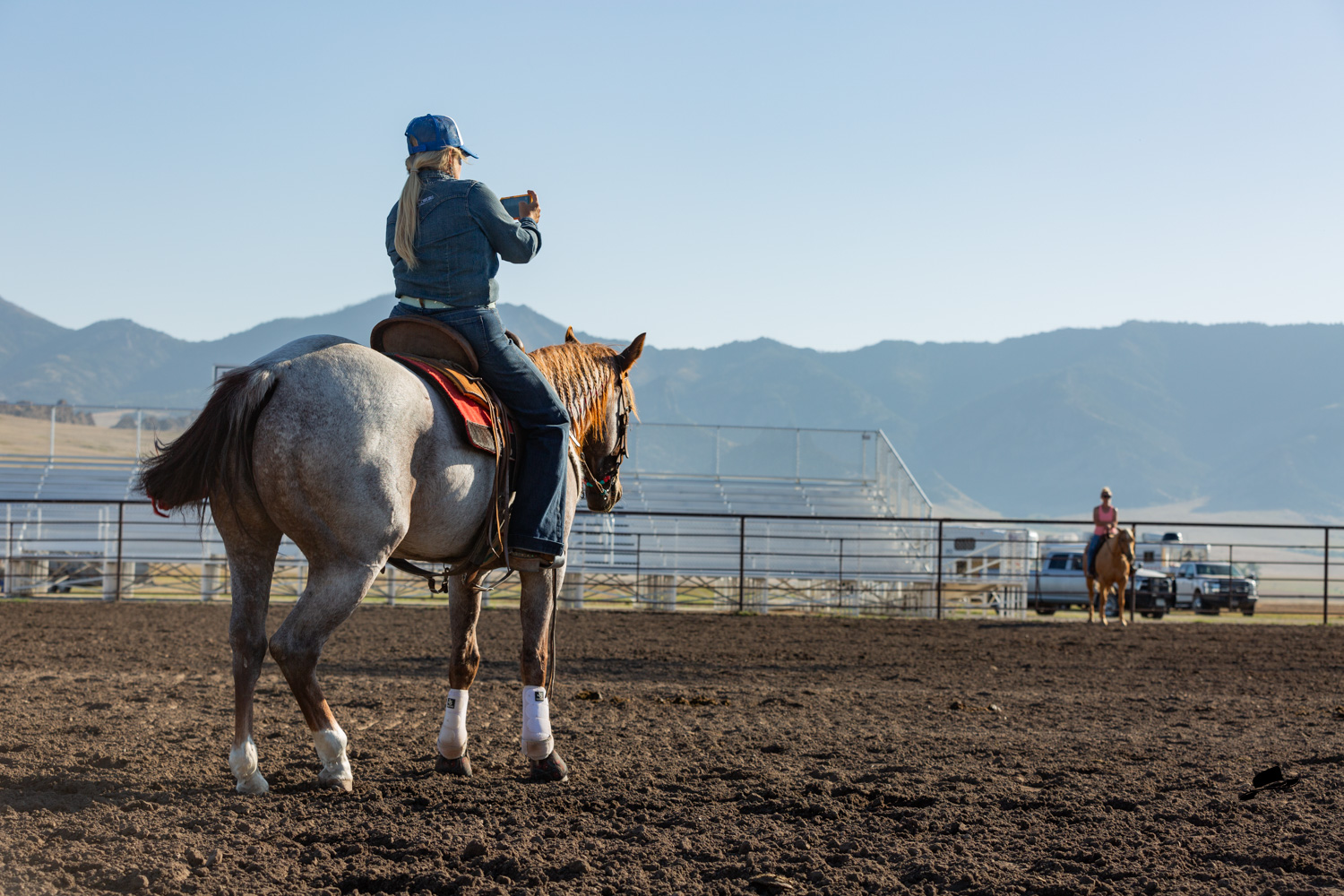
At my clinics, I don’t stand in the middle with a microphone while everyone else rides.
I ride too.
I always bring along the next horse—or horses—I’m developing, so participants can watch the process happen in real time. I may have a finished horse, I may not have a “finished” horse with me. What this is not, is rehearsed demonstrations. It’s real-time training.
That means people get to see:
- how awareness shows up before a problem escalates
- how empathy keeps a horse trying instead of shutting down
- how presentation changes when a horse needs reassurance—or leadership
Students ride alongside me, and we learn together. I talk through what I’m feeling, what the horse is telling me, and why I adjust my approach as things unfold.
This kind of teaching is rare, and it’s intentional.
I believe watching a horse get better teaches more than watching a horse that’s already perfect.
My Philosophy
Two beliefs guide everything I do:
- The horse is never wrong.
- A horse can only do one of two things at any moment—what it thinks you’re asking, or what it believes it must do to survive the moment.
That’s why I don’t believe in finished horses.
To me, calling a horse “finished” suggests that the horse is now responsible for the outcome—that it should know what to do regardless of what we bring to the ride. And I don’t think that’s fair, accurate, or helpful.
Horses don’t stop learning, and neither should we.
Our job as riders and trainers is to keep showing up with awareness, empathy, and appropriate presentation—every ride, every stage, every season.
I also don’t believe that rideable automatically means broke.
Just because you can put a leg on both sides doesn’t mean the horse understands anything.
It may be gentle. It may tolerate you. It may not hurt you.
But that doesn’t mean it knows how to respond, regulate itself, or stay connected to a rider—especially when things get hard or unfamiliar.
A horse that won’t turn around in a 90-acre pasture isn’t being “difficult.”
It’s showing us a gap in communication, leadership, or understanding.
That’s why I don’t think patterning is really about the horse.
Patterns and drills don’t teach horses what to do.
They teach us how well we’re explaining.
The pattern is simply a framework that reveals:
- our awareness of what the horse is noticing
- our empathy for how the horse experiences pressure or uncertainty
- and our ability to adjust our presentation so the horse can succeed
Drills matter—but not because they create perfection.
They matter because they help riders learn how to communicate clearly, fairly, and consistently.
When we take responsibility for how we show up, horses don’t just become more responsive—they become more confident in the partnership.
And that’s what real progress looks like.
FAQ About Barrel Racing Clinics, Horsemanship Clinics, and Riding Lessons
I get a lot of questions about my clinics — sometimes directly, sometimes from riders quietly deciding whether it’s the right fit.
So here are honest answers about what it’s like to ride in one of my Barrel Racing Clinics, who they’re for, and what you can expect.
Do I need to be an advanced rider to attend a clinic?
No.
My Barrel Racing Clinics are designed for a wide range of riders:
- Competitive barrel racers refining skills
- Recreational riders wanting more confidence
- Riders with young or green horses
- Experienced riders looking for better communication with their horse
You don’t need to be advanced. You just need to be willing to learn.
I’m nervous or rebuilding confidence — is this clinic still for me?
Absolutely.
Many riders come to clinics specifically to rebuild confidence, improve communication with their horse, or work through past setbacks.
You won’t be judged here.
Progress happens when riders feel supported.
And confidence has no age limit.
What ages of riders do you work with?
All ages.
I regularly work with:
- Youth riders developing skills
- Adult amateurs balancing horses with busy lives
- Competitive riders at all stages
- Older riders returning to riding after time away
Good horsemanship isn’t about age — it’s about willingness.
I will meet you where you are, and you’ll improve. Pinky Promise!
What if my horse is young, inexperienced, or not “finished”?
That’s completely normal.
Many riders bring:
- Green horses
- Horses needing confidence
- Seasoned horses needing refinement
- Horses working through specific issues
Clinics are meant for progress — not perfection.
Will I feel judged or embarrassed if I make mistakes?
No.
Mistakes are part of learning, and clinics should feel constructive, not intimidating. You’ll get honest feedback focused on helping both you and your horse improve — never criticism meant to make you feel small.
Most riders leave feeling more confident, clearer in their communication, and better equipped to move forward.
I’m worried I won’t be good enough. Should I wait?
Honestly, no.
Many riders think they need to improve first before attending a clinic, but clinics are where improvement actually happens.
You don’t have to arrive confident.
You just have to show up willing to learn.
How are your clinics structured?
Typically clinics include:
- Individual coaching while riding
- Horsemanship and communication exercises
- Skill refinement for horse and rider
- Problem solving tailored to each participant
- Time for questions and discussion
Every clinic adapts to the riders and horses present. They’re never the same. Each clinic will get a temporary schedule based on the length of time – but what each clinic look likes, really depends on how I read the room.
What disciplines do you focus on?
My background is heavily rooted in working cow horse, barrel racing and performance horsemanship, but the foundation applies broadly:
- Barrel racing
- Performance horses
- General horsemanship
- Rider confidence and timing
- Horse development
Good fundamentals cross disciplines.
Can I audit instead of ride?
Yes — auditing is a great way to learn without riding.
Many riders audit first to:
- Get comfortable with the environment
- Learn from other riders’ experiences
- Decide if they want to ride next time
Auditors often return later as participants.
Are your clinics competitive or beginner-friendly?
Both.
I meet riders where they are. That means:
- Competitive riders can refine details
- Beginner/intermediate riders can build confidence
- Everyone progresses appropriately
No one gets left behind.
Is it worth traveling for a horse clinic?
That depends on your goals, schedule, and budget.
I’ve personally hauled long distances to ride with clinicians who helped me grow, and many riders travel to my clinics as well. But timing and priorities matter.
If it lines up for you, great. If not, there will always be future opportunities.
Do riders come back for multiple clinics?
Yes — and that’s often where the biggest progress happens.
Horsemanship develops over time. Returning riders build on previous skills and deepen their understanding with each clinic.
How do I host a horse clinic in my area?
Many clinics happen because riders or barn owners reach out.
If you’d like to host:
- You provide the facility and local coordination
- I handle teaching and clinic structure
- We work together on promotion
Feel free to contact me to talk through details.
Where can I see upcoming horse clinics?
You can view my current clinic schedule anytime on my website.
New locations are added regularly as hosts organize events.